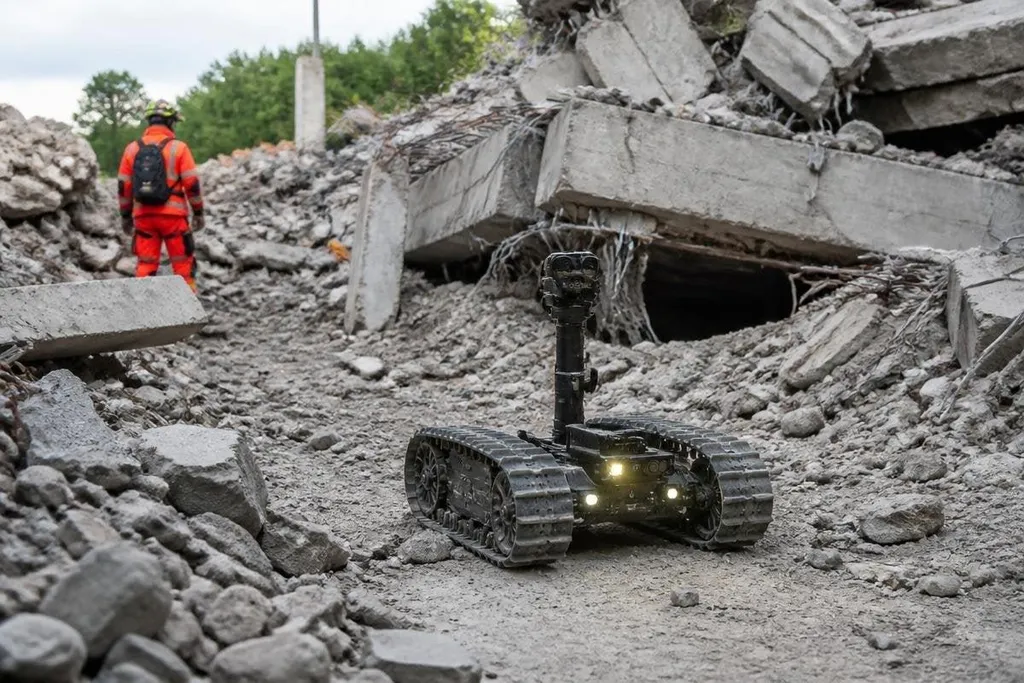
A rescue robot earns attention when it helps find, reach, or support people in danger. The hard part is proving that work outside a clean demonstration, where dust, heat, broken ground, poor signals, and limited time can all change the result.
The biggest advances to watch are practical: robots that give rescuers better information, reach places people cannot safely enter, and keep working when control links become weak.
- Better maps inside damaged buildings
- Machines that carry sensors into unsafe areas
- Control systems that keep people in charge
Robots that show rescuers what they can’t see
A robot with cameras, thermal sensors, or microphones can give a rescue team information from a risky area. That matters when smoke blocks normal vision or when a damaged structure may shift without warning.
The useful breakthrough will be clear information, not a long sensor list. The team needs to know where the robot is, what it has seen, and how recent that view is. A map that takes too long to build may be less useful than a smaller view sent at once.
This is where autonomous systems may help. In this context, autonomy means the robot can handle part of its movement or sensing without a person controlling every step. The person still sets the task and checks the result.
That human check matters most when a rescue robot enters a collapsed building before a responder can safely reach it. The crew needs a clear sensor feed and a working control link to judge what the robot found. Reporting at Robot24 can connect those details to named machines and test dates before the article asks which robots can reach unsafe spaces.
Machines that reach unsafe spaces
Judge a rescue robot by the place it can enter and the work it can do there.
A small ground robot may fit through a narrow opening. A flying robot may look over a blocked route. A robot arm may move an object that prevents access.
Those examples describe different jobs, so one design will not fit every rescue scene. The useful question is whether the robot gives a team a safer way to complete a task that already exists.
Mobility will decide much of this work. Broken floors, loose material, stairs, water, and poor visibility can stop a robot that performs well on a smooth test surface. A machine that reaches a victim but cannot return with its sensor data has not finished the job.
The same test applies to weight and power. A robot may carry a camera, radio, or small tool, but each added part can raise its weight and shorten its operating time. Those limits should be published beside the task result.
Control links and human decisions
Rescue work can spread over a large area, and walls or damaged structures can weaken radio signals. Robots need a way to report their position, send useful data, and show when a command has not arrived.
That last point matters. A control screen should make a lost connection plain instead of leaving an operator to guess. Clear status information can help a team decide when to stop, move closer, or change the plan.
I’d judge a rescue robot by the decision it improves, not by how much movement its demo contains.
A machine may drive, fly, climb, or carry equipment. Those actions matter only when they give rescuers a better choice under pressure. The proof should include the task, the setting, the control method, and the result after the robot returns.
What evidence should come next
Rescue teams need more than a short video. They need repeatable tests that show where a robot works and where it stops. Reports should name the surface, lighting, weather, signal conditions, payload, and time spent on the task.
The test should also include failure. A blocked camera, lost signal, low battery, or stuck wheel tells a rescue team how to plan around the machine. Hiding those events leaves the buyer with less useful information.
Use this checklist when a new rescue robot claims a major advance:
- Ask for the exact rescue task and the setting used for the test.
- Check how the robot reports its position after a signal loss.
- Compare operating time with the weight of its sensors and tools.
- Find out how a person stops the robot when conditions change.
- Look for results from more than one run, not one edited video.
- Separate a working prototype from a machine available to rescue teams.
What to watch next
The strongest rescue robot work will connect movement, sensing, communication, and human control in one repeatable task. A robot that handles one part well may still fail when those parts meet damaged ground and weak signals.
That is why field evidence matters more than a dramatic demonstration. The next system worth watching will show what it did, where it failed, and how a rescue team used the result.